

Small Garden Design Ideas UK: 10 Ways to Make a Compact Garden Feel Bigger

By Ian Green, Pre-Registered Member of the Society of Garden & Landscape Designers
By Ian Green, Pre-Registered Member of the Society of Garden & Landscape Designers
People assume that limited space means limited possibilities, but I find the opposite is usually true. Some of the most enjoyable projects I work on are compact gardens, because good design matters even more when every square metre must earn its place.
Whether you have a terraced garden, a courtyard, or a modest new-build plot, thoughtful design can make a small space feel generous, practical and easy to enjoy.
Here are some of the principles I return to time and again when designing small gardens.
What makes a small garden feel bigger?
A well-designed small garden isn't about squeezing in more features. It's about making better decisions.
The gardens that work best usually have:
Clear zones for different activities
A simple palette of materials
Layered planting with year-round interest
Strong focal points
Lighting for evening use
Good use of vertical space
Furniture scaled to suit the space
Small gardens don't need to do everything. They just need to do the right things well.
1. Think in Zones, Not Size

One of the biggest mistakes in small garden design is treating the space as one undifferentiated area. Instead, think about zones, even a 5m x 5m garden can have a seating zone, a planting zone, and perhaps a practical zone.
Creating zones, even subtly, through changes in surface material or planting height, makes a space feel larger and more considered than an open plan approach.
A small garden that does one thing well is infinitely better than a small garden that tries to do everything.
2. Use Levels to Create Interest and Illusion
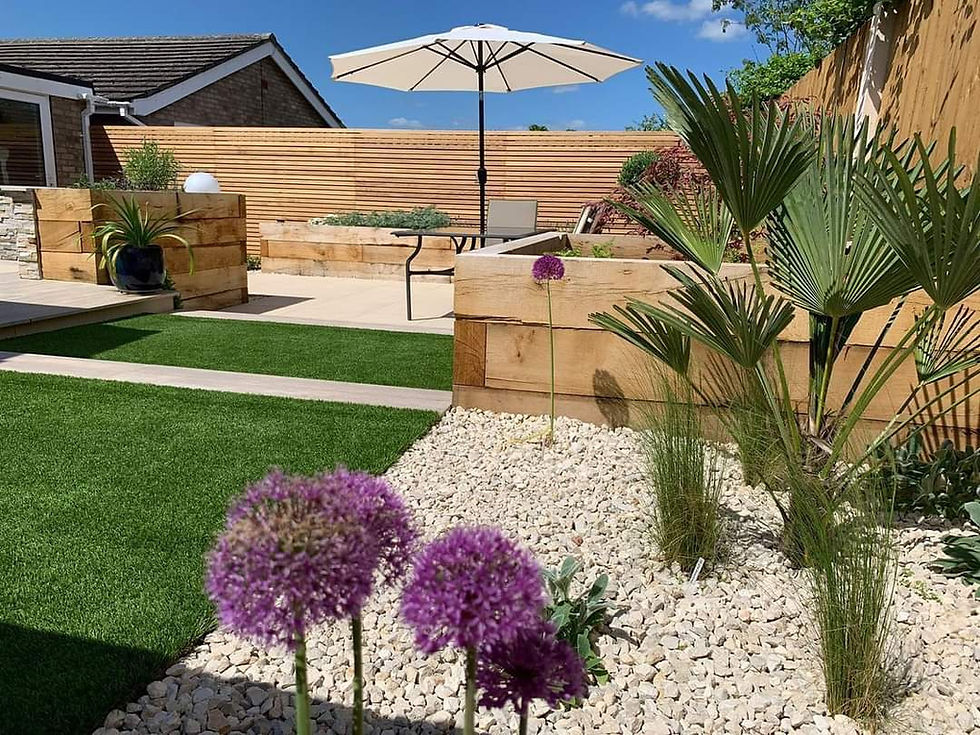
Flat gardens can sometimes feel smaller than they really are. Introducing subtle changes in level adds depth and helps create a stronger sense of space.
This doesn't have to mean full terracing. A raised planting bed, a sunken seating area, or a simple step between paving and lawn can completely transform how a space feels.
• Raised beds add depth and planting volume without taking floor space
• A sunken seating area creates enclosure and intimacy
• Split-level decking adds interest without complexity
3. Choose Materials Carefully, and Use Fewer of Them
In a small space, every surface is visible at once. Using too many different materials creates visual noise that makes a space feel chaotic and smaller than it is.
Choose one primary hard material, a good quality paving or decking, and use it consistently. Add texture or interest through planting and furniture, not through competing surface materials.
Best materials for small UK gardens:
• Porcelain paving - durable, low maintenance, wide range of sizes and tones
• Natural sandstone or limestone - beautiful, timeless
• Composite decking - lower maintenance than timber, holds its colour well
• Gravel - cost-effective, permeable, relaxed feel
4. Go Vertical
In a small garden, vertical space is massively underused. Walls, fences, and structures offer huge planting and design opportunities.
• Train climbers up walls and fences, they add lushness without using floor space
• Wall-mounted planters add greenery without sacrificing the ground plane
• A living wall or planted trellis screen creates a dramatic focal point
• Tall, slender plants (like Betula 'Jacquemontii' or columnar hornbeam) draw the eye upward
Boundaries are often neglected in small gardens. A well-planted or designed boundary transforms a space from a box into a garden.
5. Make Focal Points Work Hard
A well-placed focal point draws the eye, creates depth, and gives a small garden a sense of destination. Options include:

• A specimen plant or tree - a multi-stem Amelanchier or a cloud-pruned box
• A simple water feature - even a small one adds sound and movement
• A piece of sculpture or considered outdoor art
• A beautifully lit corner that becomes magical at night
Where the eye travels in a garden determines how large it feels. A good focal point makes a small space feel like it has depth.
6. Keep Furniture Scaled Correctly
Oversized furniture in a small garden is one of the most common mistakes. A large corner sofa that dominates the space makes everything feel cramped, even if the space itself is perfectly adequate.
Scale your furniture to the garden, not to a living room. Bistro tables, slim armchairs, and benches built into raised beds are all worth considering.
7. Use Plants to Do Multiple Jobs
In a small garden, every plant needs to earn its space. Choose varieties that offer:
• Evergreen structure for year-round presence
• Multi-season interest - spring blossom, summer flowers, autumn colour, winter bark
• Fragrance (especially near a seating area)
• Vertical or architectural form that creates presence without spreading
Think carefully about eventual spread. It's worth thinking beyond the first season. A plant that feels perfect today may eventually outgrow the space, so long-term scale matters just as much as first impressions.
8. Light it Well

Small gardens are used as much in the evening as during the day - particularly in summer. Good lighting transforms a small garden from a daytime feature into a usable evening space.
• Up light trees and structural plants for drama
• Use recessed deck or step lights rather than freestanding spikes
• Soft, warm-toned LED lighting (2700–3000K) creates atmosphere without being garish
• Consider smart lighting that can be adjusted for different moods and occasions
9. Don't Neglect the Sensory Experience
Small gardens are intimate - you're close to every element. That makes them perfect for designing with scent, texture, and sound in mind.
• Fragrant plants near the door or seating area - Trachelospermum, roses, lavender
• A small water feature adds the sound of moving water which calms and masks urban noise
• Textural contrasts in planting such as feathery grasses against bold, architectural leaves
10. Work With a Designer
Small gardens are among the most technically demanding to design well. There is no room for error, every element must be considered in relation to every other.
A professional garden designer will help you avoid the most common pitfalls, make the most of your space, and create something that looks coherent and considered rather than an accumulation of separate decisions.
Best plants for small gardens in the UK
Some of my favourites include:
Multi-stem Amelanchier for spring blossom and autumn colour.
Betula utilis 'Jacquemontii' for winter structure and light bark.
Hydrangeas for long-lasting summer interest.
Lavender and roses for fragrance near seating areas.
Evergreen shrubs such as Pittosporum and Yew for year-round structure.
Ornamental grasses for movement and texture.
The best plants aren't necessarily the biggest or showiest. In a small garden, structure and seasonality matter far more than quantity.
Common small garden design mistakes
The most common problems I see are:
Trying to fit too much into the space.
Using too many materials.
Choosing oversized furniture.
Ignoring lighting.
Planting without considering mature size.
Treating the whole garden as one open area.
Focusing on individual features rather than how the space will actually be used.
Good design removes the guesswork.
Thinking about redesigning a small garden?
Small spaces are often the most rewarding to get right, but they leave very little room for guesswork.
If you're not sure where to start, that's a perfectly good place to begin.
Whether you're living with a new-build plot, a courtyard or a compact family garden, I can help you make sense of the space and create something that feels considered, practical and easy to live with.
Frequently Asked Questions
Can a small garden have a lawn?
Yes, but think carefully about whether it earns its place. A small lawn requires the same equipment and effort as a larger one. If the lawn is purely aesthetic, planting or paving may serve you better.
What plants work best in shady small gardens?
Shade doesn't have to mean dull. Ferns, hostas, hellebores, astrantia, and hydrangeas all thrive in shadier spots and can create beautiful, lush planting in north-facing or enclosed gardens.
How can I make my small garden more private?
Tall planting on boundaries, pleached trees, planted screens, and trellis with climbers can all create privacy without making a small space feel oppressive. The key is choosing the right height and density for your specific situation.
Ian Green is a pre-registered member of the Society of Garden & Landscape Designers, offering ecological and contemporary garden design services. Based in Lincolnshire.


Comments