

Gardens Aren’t Just Seen - Why the Best Gardens Sound as Good as They Look

Updated: Sep 3
Design Thinking - Part 12: The Importance of Sound in Garden Design
By Ian Green, Pre-Registered Member of the Society of Garden & Landscape Designers

A garden can look beautiful and still not be a place where you want to spend time.
I see this surprisingly often. The paving is immaculate. The planting is well chosen. The furniture is perfectly placed. Yet, somehow, the space fails to draw people outside.
After more than 25 years designing gardens across Lincolnshire, Leicestershire, and beyond, I've learned that the spaces people enjoy most aren't just visually appealing. They engage the senses. One of the most overlooked aspects of that experience is sound.
Why Sound Matters More Than Most People Think
A garden isn't merely a photograph. You don't just look at it; you live in it. You sit in it with a cup of tea. You walk through it barefoot. You hear it before you even see all of it, especially if there's a boundary hedge or a change in level between you and the space.
Before you've taken in the planting or the paving, you've already formed an impression of a garden. Sound plays a surprisingly important part in that first feeling.
That's a big part of what I mean when I talk about designing places that feel considered, not just curated to look good in a photo.
The Three Sounds Every Good Garden Design Considers
Wind Through Planting

Grasses like Stipa tenuissima, Miscanthus, and Calamagrostis move and whisper in even the lightest breeze. Positioned well, near a seating area or along a path, they add a soft, constant sound layer that makes a static space feel alive.
Moving Water
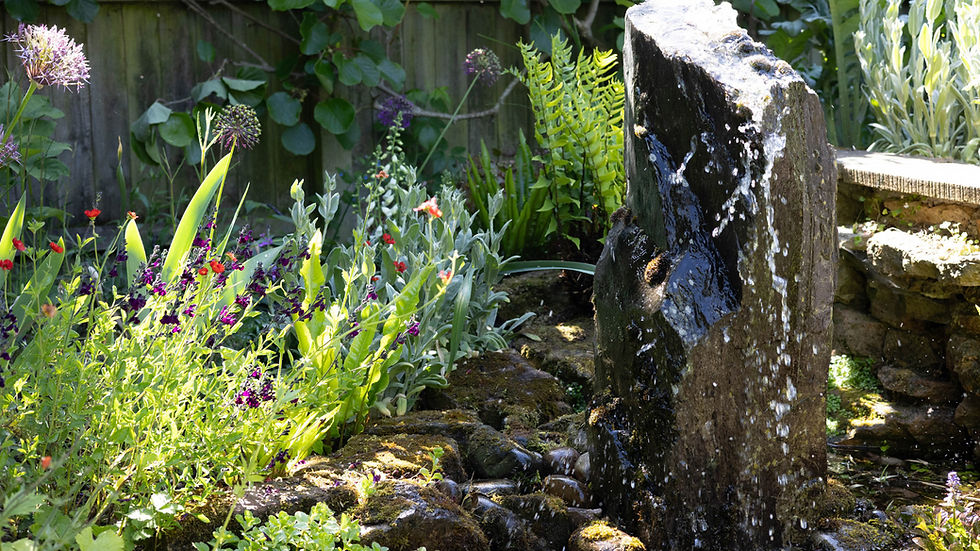
Even a small water feature, like a rill or a bubbling urn, introduces a sound that instantly signals calm. It also serves a practical purpose: it masks unwanted noise from a nearby road or neighbouring garden. This is especially important in smaller, urban plots.
Birdsong

This one you don't install; you invite. The right planting, shelter, and structure will bring birds into a garden and keep them there. A garden that attracts birdsong is usually one that has been thoughtfully designed, with layers, habitat, and the right balance of shelter and openness.
Design in Practice
One project that stands out involved introducing a narrow water rill through the centre of a formal garden. The clients originally wanted the feature because they liked the look of it. What surprised them most afterwards wasn't how it looked, but how it changed the atmosphere. The gentle movement of water softened surrounding noise and made the whole garden feel quieter and more settled.
What This Means for Garden Flow
"Flow" is a term often used in garden design, typically applied to paths and sightlines. But real flow is sensory. It's how a space guides you, through sound as much as through paving. A garden with the right sound layering leads you naturally from an open, brighter area into a quieter, more sheltered one, without you consciously noticing why.
This is the kind of thinking I bring into every design brief. It's not about adding a water feature because it looks good on a plan. It's about understanding how you'll experience the space. Every layer, planting, structure, and yes, sound, should support that experience.
Bringing Sound Into Your Own Garden
You don't need a full redesign to start noticing this. Stand in your garden and simply listen. What do you hear? Traffic? Silence? Nothing at all? That often signals that something's missing. It's rarely solved by another planter or a different paving colour. It usually comes down to structure: what's planted, where, and what it's doing for you beyond how it looks.
If your garden still doesn't feel right despite the money and effort you've put in, that's usually a sign of a design gap, not a maintenance issue. It's exactly the kind of thing I help people work through.
Good Design Begins Long Before You Notice It
Most people think garden design starts with choosing materials or plants.
In reality, before I draw a single line, I start by asking questions like:
Where do you naturally pause?
Where does the evening sun fall?
What can you hear?
What do you want to leave behind when you step outside?
Good design isn't about adding features. It's about understanding how you want a place to feel. These are the kinds of questions I explore throughout my Design Thinking series — looking at what makes a great garden and how they support everyday life.
Frequently Asked Questions
Here are a few common questions I am asked about garden sound.
Is garden sound something I should think about before or after the planting plan?
Sound is one of the first cues your brain uses to judge whether a space feels safe, calm, and worth lingering in. This often happens before you've consciously registered the planting or layout.
What plants create the best sound in a garden?
Movement-friendly trees and grasses are the classic choice. Betulas, Stipa tenuissima, Miscanthus, and Calamagrostis all catch the slightest breeze and turn it into a soft rustle. Positioned near a seating area, they do quiet, constant work that static planting simply can't.
Do I need a big water feature to get the benefit of moving water?
Not at all. A small rill, a bubbling urn, or even water trickling over a single stone can shift the whole feel of a space. In smaller or urban gardens, it's often doing double duty—softening the atmosphere while covering road noise or sounds from next door.
How do I attract more birdsong into my garden?
You can't install birdsong, but you can create the right conditions: layered planting, places to shelter, and a mix of open and enclosed areas. Birds choose gardens that feel safe and resourceful. Get that right, and the sound follows naturally.
My garden looks fine but doesn't feel right. Could this be why?
Often, yes. When a garden looks acceptable but still feels unfinished, it's usually a sign of a structural or design gap, not a styling one. Sound is one of the first things I assess when figuring out what's missing from a space.
Does garden sound change with the seasons?
It does, and that's worth planning for. Grasses that whisper in summer often go stiff and rustle in winter, while bare branches can make wind sound sharper rather than soft. A well-considered design accounts for this shift, ensuring the garden doesn't lose its sense of calm once the leaves are gone.
Is garden sound something I should think about before or after the planting plan?
Before, ideally. Sound works best when it's built into the layout from the start. Consider where a seating area sits in relation to a stand of grasses or how close a path runs to a water feature. Treating it as an afterthought usually results in a lovely-looking garden that still feels a bit flat.
Ready to Make Your Garden Feel as Good as It Looks?
Before you think about changing your garden, spend five quiet minutes listening to it. You might discover that what your garden needs isn't another feature, but a different way of thinking about the space.
And if you reach the point where you feel the space needs more than another planting idea or another patio, that's usually when a proper design conversation becomes worthwhile.
About the Author
Ian Green is a garden and landscape designer with more than 25 years' experience helping homeowners create outdoor spaces that feel personal, practical, and lasting. His work begins with listening to the people who'll use the garden and to the character of the place itself.


Comments