

Make the Boundary Disappear: How to Hide a Garden Fence with Planting

By Ian Green, Pre-Registered Member of the Society of Garden & Landscape Designer

If your garden feels smaller than it should, the boundary may be part of the problem.
A lot of gardens I’m asked to look at have the same issue hiding in plain sight: a boundary fence, often around six feet high, drawing a hard line around the whole space.
The eye hits it, stops, and the garden suddenly feels more enclosed than it really is.
And this isn’t just a small garden problem. A larger garden surrounded by visible fencing can feel just as boxed in.
Why fences can make a garden feel smaller
The instinct is often to deal with the fence itself. Paint it. Replace it. Add trellis. Find a better-looking fence.
But the more effective solution is often about what you put in front of the boundary, rather than what you do to the boundary itself.
A fence is a strong visual line. If you can see that line running uninterrupted around the garden, your eye immediately understands exactly where the space ends.
Good planting can change that.
Use planting to soften the boundary
Rather than leaving a conspicuous strip between the planting and the fence, bring the planting
towards the boundary so that the two begin to read as one.
Climbers can soften the vertical face of the fence, while shrubs create body and depth in front of it. Perennials and ornamental grasses add another layer of texture and movement.
You’re not necessarily trying to hide every inch of fencing.
The aim is to break up that obvious boundary line so it stops being the first thing you notice.
Layer planting to create depth
Layering is important.
If everything sits at the same height, you can simply create another flat line in front of the fence.
Instead, think in terms of different heights and forms.

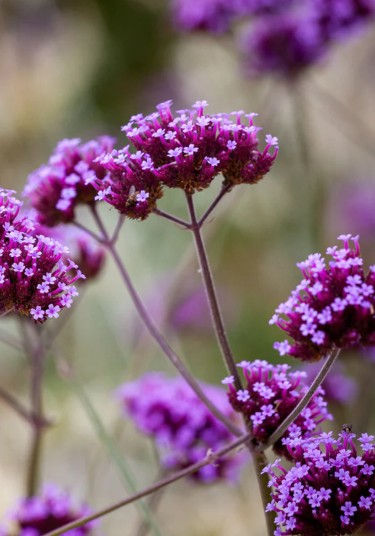
Climbers such as Clematis and climbing roses can provide vertical coverage. Medium and taller shrubs give the planting structure, while perennials such as Veronicastrum virginicum, Verbascum Dark Eyes, and Achillea, or ornamental grasses including Miscanthus and Calamagrostis, can introduce softer layers and movement.
The exact combination will depend on the aspect, soil, available planting depth and the character of the wider garden.
What matters is the principle: rather than allowing the eye to travel straight to the fence and stop, give it planting, texture and depth to travel through.
Once that happens, the boundary becomes less obvious and the garden can feel considerably more generous.
It’s a relatively simple design decision, but it can change the way the whole space feels.
Frequently Asked Questions
How do you hide a garden fence with planting?
Bring planting towards the boundary rather than leaving a clearly visible strip in front of the fence. A combination of climbers, shrubs, perennials and ornamental grasses can soften the fence at different heights and create a greater sense of depth.
You don’t necessarily need to hide the entire fence. Breaking up the continuous boundary line is often enough to change how the garden feels.
How can I make a fenced garden feel bigger?
Try to reduce the number of hard, uninterrupted boundary lines the eye can see. Layered planting in front of fencing helps blur where the garden ends and creates depth, which can make the space feel less enclosed.
The wider layout matters too, so boundary planting should ideally feel connected to the rest of the garden rather than treated as a separate screen.
What can I plant in front of a six-foot fence?
There isn’t one planting combination that works for every fence.
Climbers such as clematis and climbing roses can soften the vertical surface. Shrubs provide structure and volume, while taller perennials and ornamental grasses can add movement and seasonal interest.
The right plants will depend on whether the boundary is sunny or shaded, the soil conditions, the depth of the border and how much maintenance you want to take on.
Does boundary planting work in larger gardens?
Yes. Even a generous garden can feel enclosed when fencing creates a strong visual line around the entire plot. The same design principle applies: soften and interrupt the boundary so the eye notices the planting and depth of the garden rather than the fence surrounding it.
A different way to look at the problem
If your garden feels boxed in, the fence itself may not be the real problem.
Sometimes it takes a fresh look at the space to understand what needs to change.
If you’re not sure where to start, that’s a perfectly good place to begin.
About the author: Ian Green is a garden and landscape designer with over 25 years' experience, working with clients across Lincolnshire, East Midlands and beyond. He believes that the best gardens start with listening to the space, and to the people who'll live in it


Comments